From traditional territories and family farming to school meals, the Terra Nutre project was created with the goal of expanding access to healthy and traditional foods for public school students in Mato Grosso, while promoting [...]
WRITTEN BY COMIDA DO AMANHÃ
on 26/05/2026
|
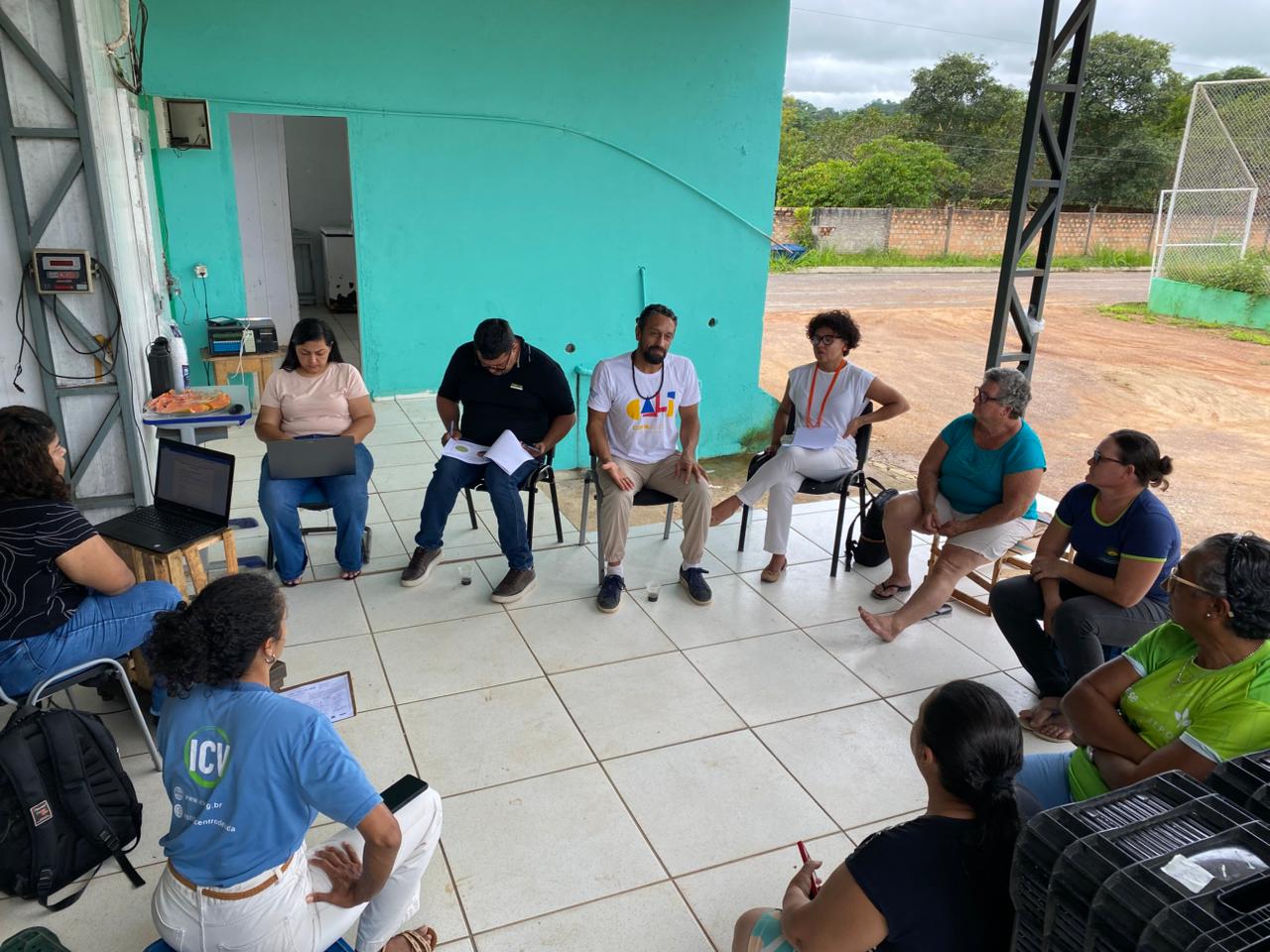
From traditional territories and family farming to school meals, the Terra Nutre project was created with the goal of expanding access to healthy and traditional foods for public school students in Mato Grosso, while promoting local production through food education and income generation in rural areas and traditional communities.
According to the 2026 World Obesity Atlas, Brazil has approximately 7 million children and adolescents, aged 5 to 19, living with obesity and at risk of developing diseases such as diabetes and hypertension.
To address this situation, Terra Nutre seeks to strengthen the National School Feeding Program (PNAE) by encouraging the inclusion of fresh, traditional, and local foods. The initiative promotes food security for students, generates income for producers, and contributes to environmental protection, as family farming and traditional agricultural systems respect nature’s rhythms and life cycles.
An important tool in this process is Law 15.226/25, which stipulates that at least 45% of the funds allocated for school meals and transferred by the National Fund for Education Development (FNDE) to states and municipalities must be used to purchase food from family farms. It is through the PNAE that family farmers and traditional communities have the opportunity to market their produce, also benefiting students—many of whom are the sons and daughters of the producers themselves.
But how can we ensure that this healthy food actually reaches the students? We need to expand the productive capacity of these actors, strengthen their social organizations, and broaden their marketing opportunities, especially through public procurement.
This is explained by Camila Rodrigues, deputy director of the Instituto Centro de Vida (ICV): “On the procurement side, we want implementing entities, such as city governments and other agencies, to be made aware of this. With this, we hope that the purchase of local and healthy foods will also expand, improving the quality of school meals.”
One of the project’s areas of operation is the Xingu Indigenous Territory (TIX), where traditional foods have been supplying schools since the early 2000s, when the program began.
“We observe children eating murici, pequi, honey, mangarito, fish, manioc starch, and flour—foods delivered by their families. This is a result of the peoples’ self-determination and of shifts in public policy that inspire its implementation in other territories,” explains Luísa Tui, an anthropologist at the Socio-Environmental Institute (ISA) and a member of the Terra Nutre team.
She also highlights that food sovereignty is a central issue for the peoples of the Xingu, but that challenges remain. Among them are the necessary adaptations in production methods in light of changes in water cycles and the impacts caused by occupation in the areas surrounding the territories, as well as bureaucratic obstacles that often disregard the reality of the communities.
Ronaldo Adriano, subproject coordinator at the Center for Alternative Technology (CTA), believes that attention must be paid to contract compliance. “There is still room for improvement in compliance with the law. On one hand, we have organizations with demand and preparing to participate more and more in public calls for proposals; and on the other hand, the implementing entities that need to improve efficiency in the procurement of local foods and in meeting the 45% requirement. One of the major challenges we see is ensuring that signed contracts are not interrupted.”
One of Terra Nutre’s tools is the development of organizational assessments, aimed at mapping these challenges and identifying ways to strengthen the implementation of the PNAE. The CTA coordinator explains that this mapping will provide clear indicators to support the PNAE’s implementation.
Family farming and the agricultural systems of indigenous peoples, quilombolas, and other traditional communities serve as models for food production in harmony with nature. These producers develop practices that preserve the environment and promote the conservation of water, biodiversity, and the climate. Nevertheless, their products continue to face difficulties in accessing markets and expanding sales.
This link between sustainable production and school feeding is what drives the consortium of institutions behind Terra Nutre. The project is funded by the Amazon Fund/BNDES, under the Amazon in Schools initiative, and implemented by the Instituto Centro de Vida (ICV) in partnership with the Instituto Socioambiental (ISA), the Centro de Tecnologia Alternativa (CTA), the Instituto Comida e Cultura (ICC), the Instituto Comida do Amanhã (CdA), the Sustainable Connections Institute (Conexsus), and the Mato Grosso Institute of Education, Science, and Technology Development Support Foundation (Funadif), in addition to support from the Federal Public Prosecutor’s Office (MPF) as part of Catrapovos-MT’s initiatives.
“It is a coordinated effort that will, in practice, support those who produce sustainably and those who purchase these foods through the PNAE,” said the deputy director of the Instituto Centro de Vida (ICV).