On November 10, the documentary “Brazil Food Systems and Climate Framework for Public Policies” was released during the 31st United Nations Climate Change Conference (COP31) in Antalya, Turkey. The film brings together the experiences of [...]
WRITTEN BY COMIDA DO AMANHÃ
on 10/11/2026
|
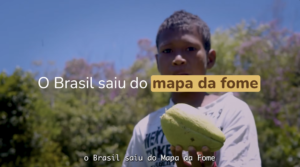
On November 10, the documentary “Brazil Food Systems and Climate Framework for Public Policies” was released during the 31st United Nations Climate Change Conference (COP31) in Antalya, Turkey. The film brings together the experiences of civil society organizations (CSOs) and communities that are developing initiatives to make food systems more sustainable and highlights the importance of integrating climate, food security, and social justice into public policy.
The production is an initiative of the curatorial committee, coordinated by the Food of Tomorrow Institute and composed of ACT Health Promotion, the Alliance for Adequate and Healthy Food, the National Agroecology Network (ANA), AS-PTA – Family Farming and Agroecology, Colansa, CONAQ, ISPN, and the Observatory of Sociobiodiversity Economies (ÓSocioBio), with support from Tilt Collective.
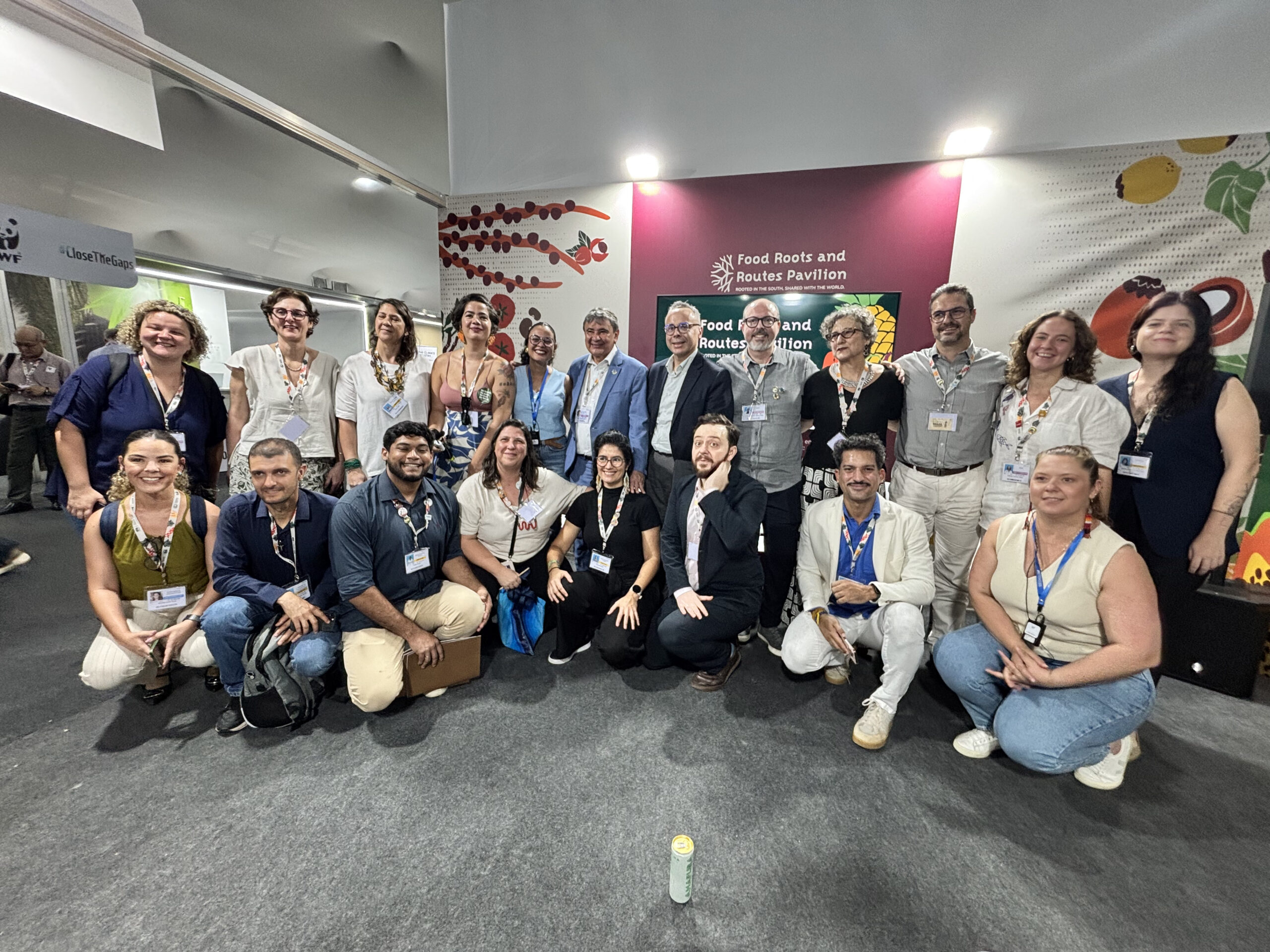
The curatorial committee was formed during COP30 in Belém (PA), when the organizations participated in developing the program for the Food Roots and Routes pavilion in the COP30 “blue zone,” dedicated to highlighting the transition of food systems as part of the climate solution, with a focus on the perspective of the Global South. As a continuation of this collaboration, the committee decided to produce the documentary to highlight the experiences of these regions and encourage the adoption of the Reference Framework on Food Systems and Climate for Public Policies, a document released by the Ministry of Development, Social Assistance, Family, and the Fight Against Hunger (MDS), through the Secretariat of Food and Nutritional Security (Sesan), in 2025.
The document presents national guidelines to inform public policy and draws on experiences from local communities, demonstrating how different ways of producing, distributing, and consuming food can help address the climate crisis.
Structured around seven principles—the Human Right to Adequate Food, Food Sovereignty, Climate Justice, Social, Environmental, Economic, and Cultural Sustainability, Systemic Approaches, Climate Federalism, and Social Participation— the Reference Framework on Food Systems and Climate for Public Policy proposes a food systems model capable of ensuring regular access to adequate food, respecting cultural diversity, strengthening societal participation, and guiding decisions aligned with environmental limits and the diverse realities of local communities.
For Francine Xavier, director of the Food of Tomorrow Institute, the Reference Framework represents an important opportunity to advance the development of public food policies that recognize the direct relationship between food systems and climate change. “More than just establishing guidelines, it offers an integrated vision to guide decisions and connect different agendas, placing the food agenda at the center of strategies to address the climate crisis,” she noted.
Experiences from different regions showcase solutions to the climate crisis
Throughout the documentary, initiatives by civil society organizations (CSOs) and communities working in agroecology, family farming, food production and distribution, and the promotion of traditional knowledge are featured, demonstrating possible paths toward a more resilient food transition aligned with climate challenges.
Through stories and experiences, the video shows how practices developed in these regions can help guide public officials in building integrated strategies that take into account the environmental, social, and economic dimensions of food. The documentary also aims to strengthen advocacy and mobilization around this issue during COP31, expanding knowledge about the Framework and supporting initiatives already working on this agenda.
“The film begins with an analysis of the current situation in Brazil, but it also seeks to show how Brazil can contribute solutions and strategies to address climate change through the transformation of food systems. Our rich biodiversity of biomes and our traditional, Indigenous, Quilombola, peasant, and family farming communities reveal concrete paths toward building healthier and more sustainable food systems. In this sense, the film serves as a wake-up call regarding the challenges we face, but also as a proposal, bringing Brazilian experiences and solutions to the global debate during COP31,” said Fran Paula, a national leader and member of the environmental, agricultural, and ethno-development collective of the National Coordination of Quilombola Organizations (CONAQ).
The relationship between food and climate is also explored through the impacts of extreme weather events on food systems and the effects of certain food production and distribution models on climate change. The narrative reinforces that this agenda lies at the heart of the climate crisis but also represents a strategic front for building solutions.
Furthermore, the documentary highlights the need for a transition that considers not only food production but also the human right to adequate food, the preservation of ecosystems, the valorization of traditional knowledge, and the fight against social inequalities.
“These communities are already proving that it’s possible: there are many initiatives producing healthy food, caring for the land, and ensuring income—almost always without support. Meanwhile, public funds continue to subsidize ultra-processed foods. Imagine where we could go if we funded agriculture that promotes health, sustainability, and social justice,” said Paula Johns, co-founder and director of ACT Health Promotion.
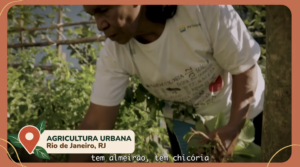
Among the initiatives featured in the documentary are the Women of RAMA—the Agroecology Network of the Barra do Turvo Quilombo, in the Ribeira Valley (SP); the “Agroecology: Cultivating Health and Well-Being in the Favelas” project in Rio de Janeiro; the Solidarity and Emergency Kitchens; the Agroecological PNAE, which seeks to increase the presence of agroecological foods in school meals in 11 cities across Brazil; and the work of women farmers at Borborema Agroecológica in Paraíba. These initiatives demonstrate different ways of linking food production, biodiversity conservation, the promotion of traditional knowledge, and community empowerment.
The documentary is available on YouTube and can be viewed at https://youtu.be/i-cFFI8sVYk.
Share!
To learn more
Keep learning with other related articles