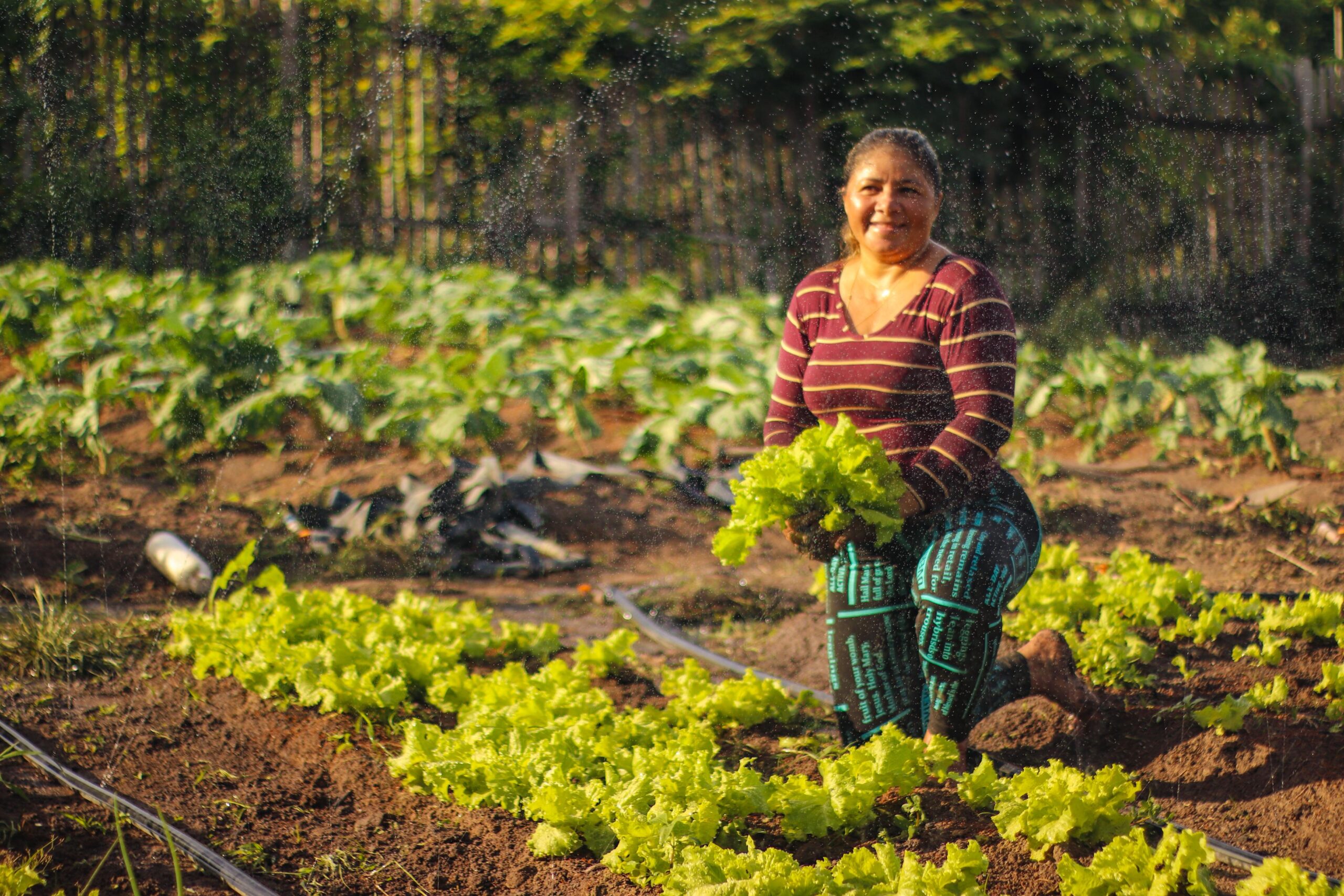
In 2025, the Food Cities Strategy achieved milestones that reinforced its role as an essential policy for strengthening the urban food agenda in Brazil. The strength of the initiative lay in a strategic combination of [...]
WRITTEN BY COMIDA DO AMANHÃ
on 15/01/2026
|
In 2025, the Food Cities Strategy achieved milestones that reinforced its role as an essential policy for strengthening the urban food agenda in Brazil.
The strength of the initiative lay in a strategic combination of qualified territorial listening and innovation in public policies, which consolidated the Strategy as one of the main national initiatives aimed at transforming food systems, always guided by the human right to adequate and healthy food.
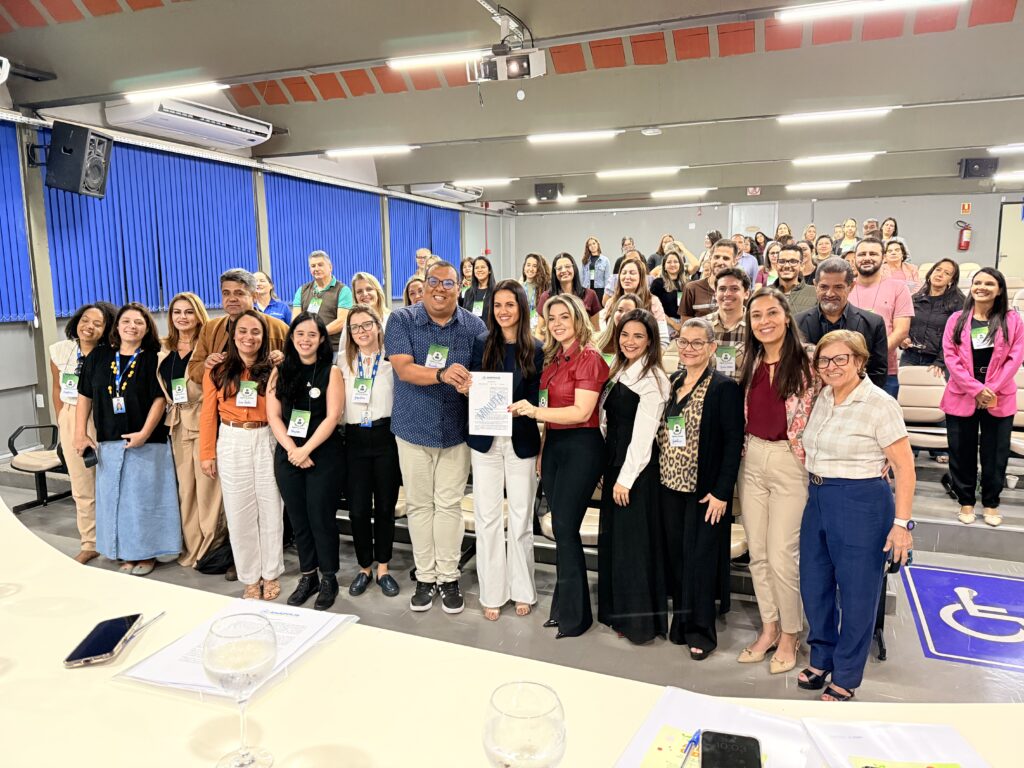
60 in-person workshops mobilize municipalities in the First Implementation Cycle in all regions of the country
Throughout the year, the Ministry of Development and Social Assistance, Family, and Hunger Alleviation (MDS), with technical support from the Food for Tomorrow Institute, promoted 60 in-person meetings with municipalities in the first cycle of implementation of the Strategy – MDS Ordinance No. 1,036/2024. Held in all regions of Brazil, the workshops represented a broad process of listening, cooperation, and joint construction.
These spaces brought together public managers, civil society organizations, universities, public policy councils, and local leaders. The main result was the collaborative development of situational diagnoses on the urban food agenda, a central tool for understanding the food reality of each territory, identifying weaknesses, recognizing potentialities, and defining the priorities that guided the Municipal Implementation Routes.
The process reinforced the need for coordination between SUS, SUAS, and SISAN, stimulating integrated and innovative responses to complex challenges affecting urban and rural areas.
To learn more about the in-person workshops of the First Implementation Cycle, visit the official website of the Food Cities Strategy at ReDUS:
https://www.redus.org.br/alimenta-cidades/noticias
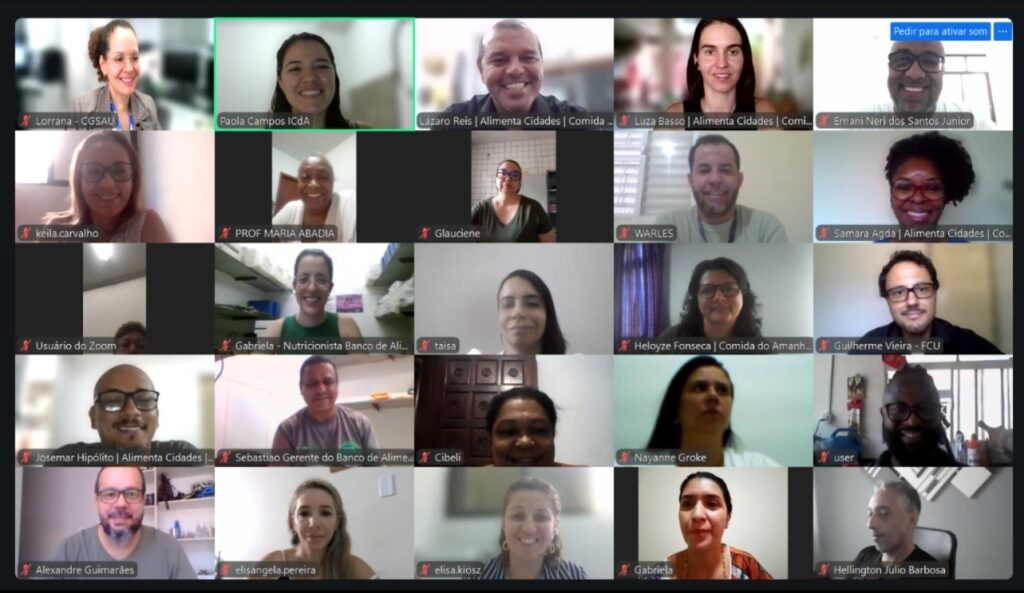
Expansion of the Food Cities Strategy: 102 municipalities and a stronger focus on the climate agenda
Also in 2025, the publication of two new ordinances expanded the Feed Cities Strategy to 102 municipalities, including all Brazilian capitals, cities with more than 300,000 inhabitants, and, on an emergency basis, municipalities in Rio Grande do Sul affected by the 2024 floods.
This expansion consolidated the Strategy as one of the main public policies aimed at addressing food inequalities in urban centers. Currently, the initiative reaches about 77 million people, with special attention to territories marked by food deserts and swamps—areas characterized by low supply of fresh foods and high presence of ultra-processed products.
New cycle: technical support from the Comida do Amanhã Institute to 24 new municipalities
Ordinance No. 1,098, dated July 16, incorporated 24 new municipalities into the Strategy, completing the goal of reaching the country’s main urban centers. To start this new cycle, between November and December 2025, virtual mobilization and training workshops were held, conducted by the Food of Tomorrow Institute, in coordination with the MDS, the coordinating body of the Strategy, in coordination with the Ministry of Development and Social Assistance, Family, and Hunger Alleviation (MDS), the coordinating body of the Strategy.
The meetings brought together municipal managers, technical teams, and community leaders from the newly incorporated municipalities, focusing on the shared construction of situational diagnoses, a fundamental step in guiding local food and nutrition security policies integrated with health, social assistance, urban planning, and climate agendas.
Learn more about the Expansion of the Alimenta Cidades Strategy:
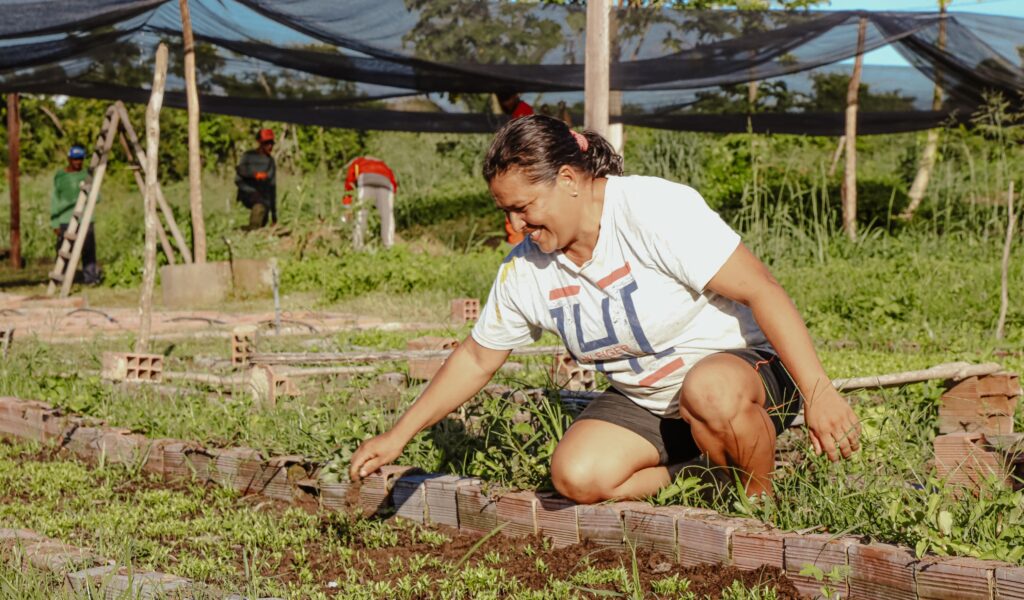
Training in Urban and Peri-Urban Agriculture strengthens local actions
Under the coordination of Sesan/MDS and the Getulio Vargas Foundation (FGVces), the first edition of the Training in Urban and Peri-Urban Agriculture program structured a hybrid path to train municipalities in planning actions adapted to their territories, within the scope of the Food Cities Strategy. The in-person stage was organized around six anchor cities — São Bernardo do Campo (SP), Osasco (SP), Olinda (PE), São Luís (MA), Boa Vista (RR), and Porto Alegre (RS) — which coordinated the participation of 23 satellite cities, optimizing resources and promoting exchanges between different territorial realities.
The process resulted in the development of 20 pilot projects, designed as laboratories to test solutions and strengthen local governance arrangements. The lessons learned and challenges mapped will be systematized and will serve as the basis for the design of the 2026 training cycle, with a focus on expanding the network of municipalities and deepening technical support for the creation of legal, financial, and management instruments that ensure the scalability of urban agriculture policies, in conjunction with food security, territorial development, and sustainability.
Check out more details about the training:
https://www.redus.org.br/alimenta-cidades/noticias/nova-postagem-jcyS4I
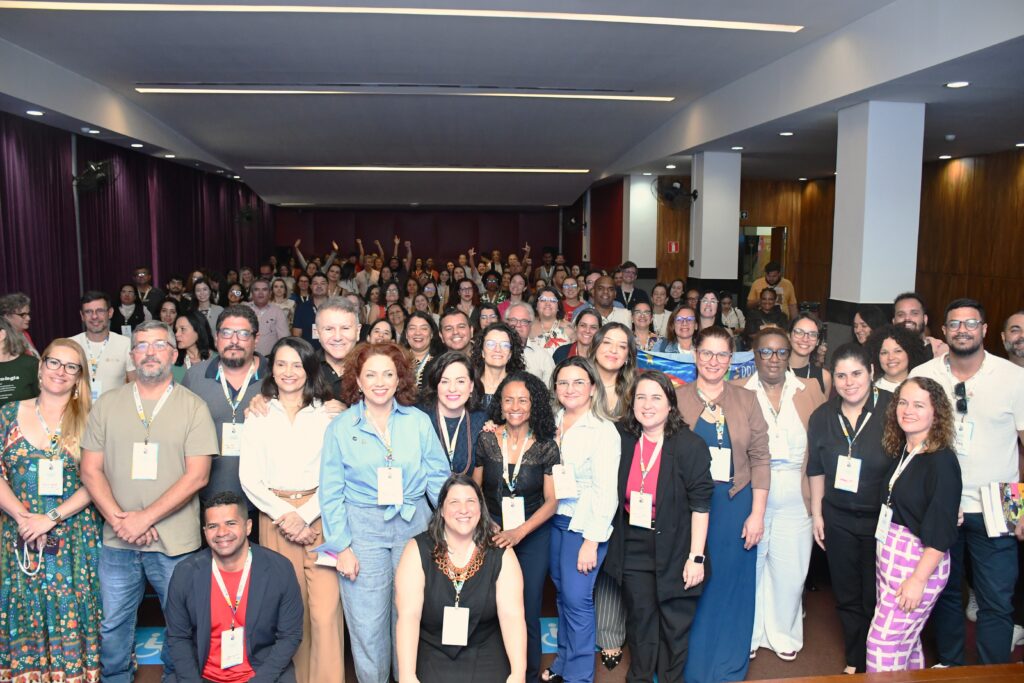
III National Meeting of the Food Cities Strategy
From September 22 to 24, Belo Horizonte (MG) hosted the III National Meeting of the Food Cities Strategy, bringing together public managers, experts, civil society organizations, and representatives from participating cities.
The purpose of the meeting was to stimulate technical and political dialogue, strengthen cooperation networks, welcome new municipalities, and promote reflection on ways to build healthier, more sustainable, and circular urban food systems.
The program included roundtable discussions, workshops, exhibitions, debates, and field visits, with topics such as intersectoral governance, financing food security policies, urban agriculture, supply, and strengthening social participation.
Want to know more about this moment of exchange, learning, and inspiration among cities? See the full coverage here, with videos, articles, and records of the meeting.
September 22: https://youtube.com/live/pjUvcQiGikk?feature=share
September 23: https://youtube.com/live/7rKTbWqCN20?feature=share
https://www.instagram.com/p/DPM0cKFkakM/
https://www.instagram.com/reel/DQNGmo3EU25/
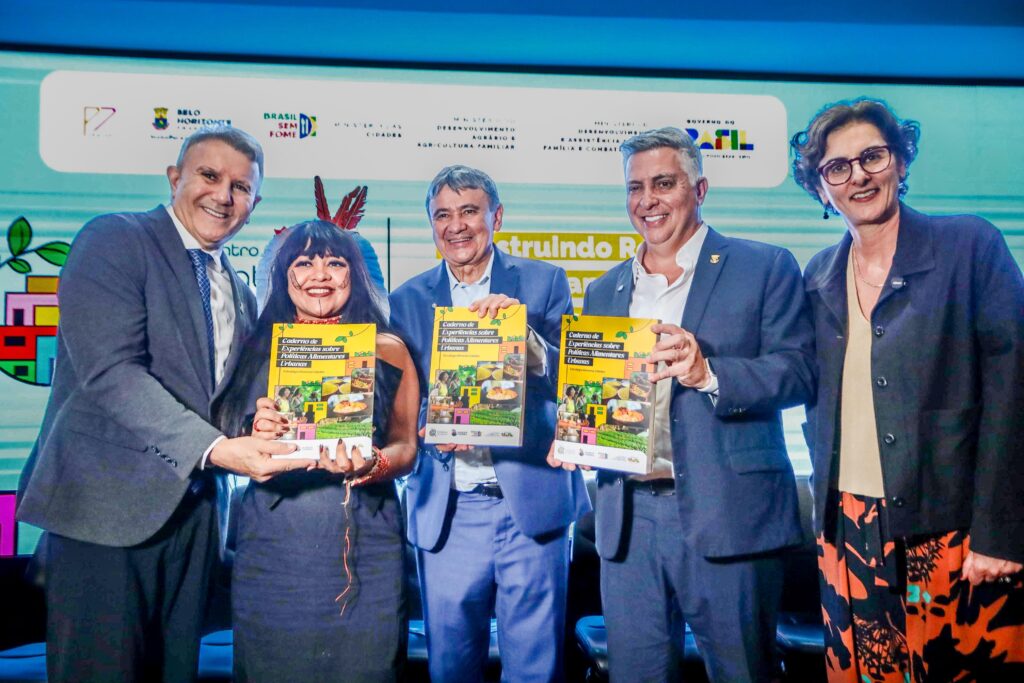
Experience Notebook: cities that inspire innovative food policies
Another milestone in 2025 was the launch of the Experience Notebook on Urban Food Policies, a joint publication by SESAN/MDS, the Food of Tomorrow Institute, and the cities listed in Ordinance No. 1,036/2024.
The document brings together inspiring practices from all regions of the country, focusing on expanding the human right to adequate food in the urban context. The experiences highlight innovative solutions for supply, governance, food education, local production, and intersectoral integration, among others.
The Notebook serves as a support tool for public managers, social organizations, and other actors seeking to strengthen food systems that are more equitable, resilient, and aligned with territorial dynamics.
Access the digital version here:
https://www.instagram.com/reel/DO9WBZqkYRS/
Update to the Alimenta Cidades Platform
The new version of the Alimenta Cidades Platform is now live with improved features, greater accessibility, and updated content.
Among the new features is a tool for registering public food and nutrition security (SAN) facilities, which gathers information on the management, structure, and operation of spaces such as community kitchens, popular restaurants, and food banks.
The platform also provides content on food deserts and swamps, offering insights to understand inequalities in access to quality food and guide municipal planning.
Visit: https://alimentacidades.digital
Healthy school environment: how municipalities are transforming school meals
In 2025, the Alimenta Cidades Strategy, in partnership with the Federal University of Minas Gerais (UFMG), intensified technical support to municipalities for the promotion of healthier school environments, focusing on strengthening adequate nutrition, food education, and child protection in the face of the growing supply of ultra-processed foods.
Technical support boosted local management training, the review of practices, and the integration of education, health, and social assistance policies. In the regulatory field, significant advances broadened the national debate on food governance and child protection, reaffirming the role of schools as strategic spaces for care, citizenship, and well-being.
Want to understand how municipalities have advanced in promoting healthier school environments in 2025? Read the full articles here:
https://www.redus.org.br/alimenta-cidades/noticias/nova-postagem-R8EN9R
https://www.redus.org.br/alimenta-cidades/noticias/nova-postagem-CFyg9u
https://www.redus.org.br/alimenta-cidades/noticias/nova-postagem-QRZhIJ
Alimenta Cidades +1000 marks the largest expansion of the Strategy
The year 2025 also marked the launch of Alimenta Cidades +1000, the largest expansion cycle of the Strategy since its creation. The new phase significantly expands the scope of federal technical support and drives territorial innovation and the improvement of food policies in cities, with a special focus on urban peripheries.
Ordinance No. 1,136, published on December 4, officially opened the period for expressions of interest in the Alimenta Cidades Platform, which brings together regulatory guidelines, reference documents, and step-by-step instructions for joining.
Alimenta Cidades +1000 consolidates the Strategy as a central axis of federal policies to combat hunger and promote healthy and sustainable food systems.
See the full text of Ordinance No. 1,136/2025: http://www.in.gov.br/web/dou/-/portaria-mds-n-1.136-de-4-de-dezembro-de-2025-673587366
To submit your expression of interest, visit the Alimenta Cidades Platform: https://alimentacidades.digital/