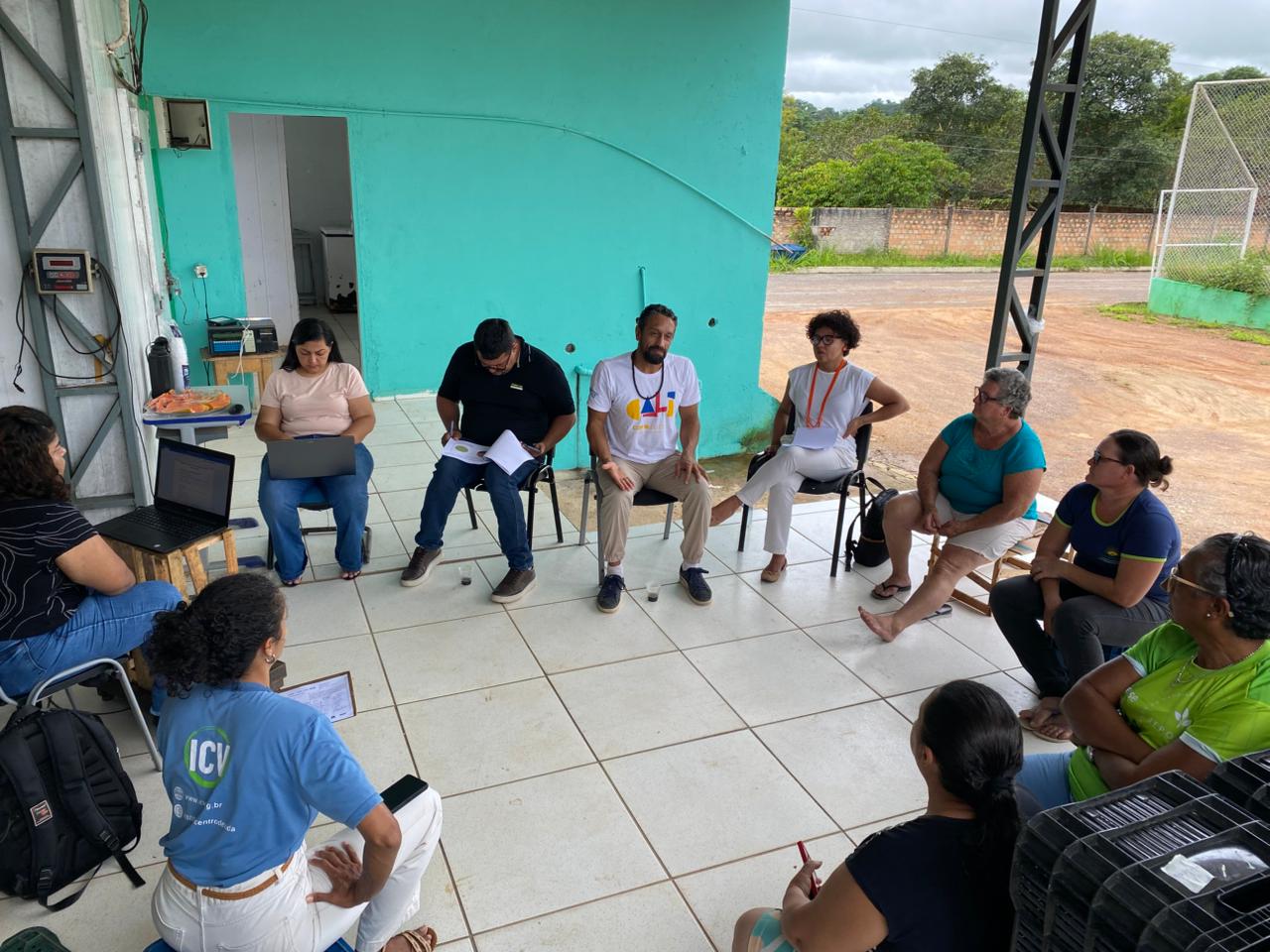
Representatives from five municipalities in the northern region of Mato Grosso participated on the 20th and 21st in the Workshop on Strengthening the Management of the National School Feeding Program (PNAE). Held in Alta Floresta, [...]
WRITTEN BY COMIDA DO AMANHÃ
on 03/11/2026
|
Representatives from five municipalities in the northern region of Mato Grosso participated on the 20th and 21st in the Workshop on Strengthening the Management of the National School Feeding Program (PNAE). Held in Alta Floresta, about 800 kilometers from Cuiabá, the event is part of the Terra Nutre Project and brought together secretaries of education and agriculture, nutritionists, and technical staff from the administrative and local procurement departments of the cities of Guarantã do Norte, Carlinda, Paranaíta, Alta Floresta, and Nova Bandeirantes.
The training was conducted by Comida do Amanhã and the Instituto Centro da Vida (ICV), with participation from the IFMT Development Support Foundation (Funadif), the Collaborating Center for School Food and Nutrition (CECANE-MT), and the Mato Grosso Traditional Foods Commission (Catrapovos-MT), and was promoted by the Terra Nutre consortium.
Present at the event, Francine Teixeira Xavier, director of the Comida do Amanhã Institute, stated that the initiative aims to overcome bottlenecks in the implementation of public policy: “The goal is to provide students with quality meals and promote local development by strengthening family farming and the production of traditional peoples and communities.”
New resolutions and ongoing monitoring
During the two-day program, municipalities received guidance on the regulations governing public procurement through open calls for bids and on opportunities for PNAE training. An update on regulatory frameworks was also highlighted, bringing municipal teams in line with the most recent federal regulations.
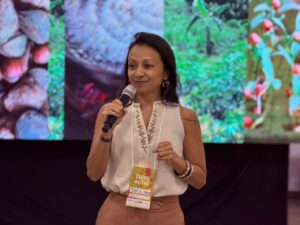
ICV Deputy Director Camila Rodrigues outlined the next steps of the initiative in collaboration with municipal governments: “We will also focus on sharing experiences and providing training on workflows and processes that will benefit the procurement of products from family farms and traditional communities in these municipalities. In addition to training, we also intend to support these municipalities in their day-to-day operations, strengthening this process so that it becomes more efficient and equitable for the communities.”
At the conclusion of the program, the training reinforced the consortium’s commitment to supporting municipal administrations. Improving administrative and technical procedures is essential for enhancing the implementation of the PNAE, expanding local producers’ access to the institutional market, and ensuring that students’ meals consist of real food that promotes socio-biodiversity.
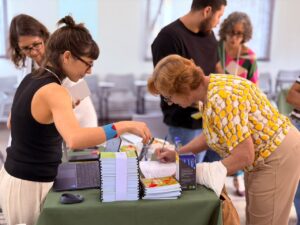
The technical training for the teams included collaborative activities and alignment with the new resolutions of the National Fund for Education Development (FNDE). The event also brought municipalities closer together and encouraged cooperation and the creation of a network to address challenges and share opportunities.
On November 4 and 5, another edition of the workshop will be held in the municipality of Cáceres (MT).
The Role of “Comida do Amanhã” in Terra Nutre
Terra Nutre – Amazon in Schools is a project aimed at strengthening the National School Feeding Program (PNAE) in Mato Grosso by fostering a connection between sustainable family farming and school meals.
The initiative is funded by the Amazon Fund/BNDES, as part of the “Amazon in Schools” initiative, and implemented by ICV in partnership with the Socio-Environmental Institute (ISA), the Center for Alternative Technology (CTA), the Food and Culture Institute (ICC), the Food of Tomorrow Institute (CdA), the Sustainable Connections Institute (Conexsus), and the Foundation for the Development of the Mato Grosso Institute of Education, Science, and Technology (Funadif).
Terra Nutre also has Technical Cooperation Agreements with the Mato Grosso State Department of Education (Seduc-MT) and with the municipal governments of Paranaíta, Nova Bandeirantes, Carlinda, Alta Floresta, Porto Esperidião, Vila Bela da Santíssima Trindade, Mirassol d’Oeste, Poconé, Nossa Senhora do Livramento, and Guarantã do Norte, in addition to support from the Federal Public Prosecutor’s Office (MPF) as part of Catrapovos-MT’s initiatives.
Throughout the project’s four-year duration, Comida do Amanhã has been directly involved in identifying the challenges related to the procurement and consumption of socio-biodiversity foods in public schools, co-organizing strategic workshops and in-person meetings to mobilize public officials, educators, and producers. CdA will also manage data and prepare a report outlining opportunities and challenges for the implementation of food policies.
Share!
To learn more
Keep learning with other related articles