Municipal officials discussed local initiatives to promote diversity in food systems during an online meeting The Urban Laboratory for Public Food Policy (LUPPA) held the third seminar of the program’s 5th edition last Wednesday (29). [...]
WRITTEN BY COMIDA DO AMANHÃ
on 07/05/2026
|
Municipal officials discussed local initiatives to promote diversity in food systems during an online meeting
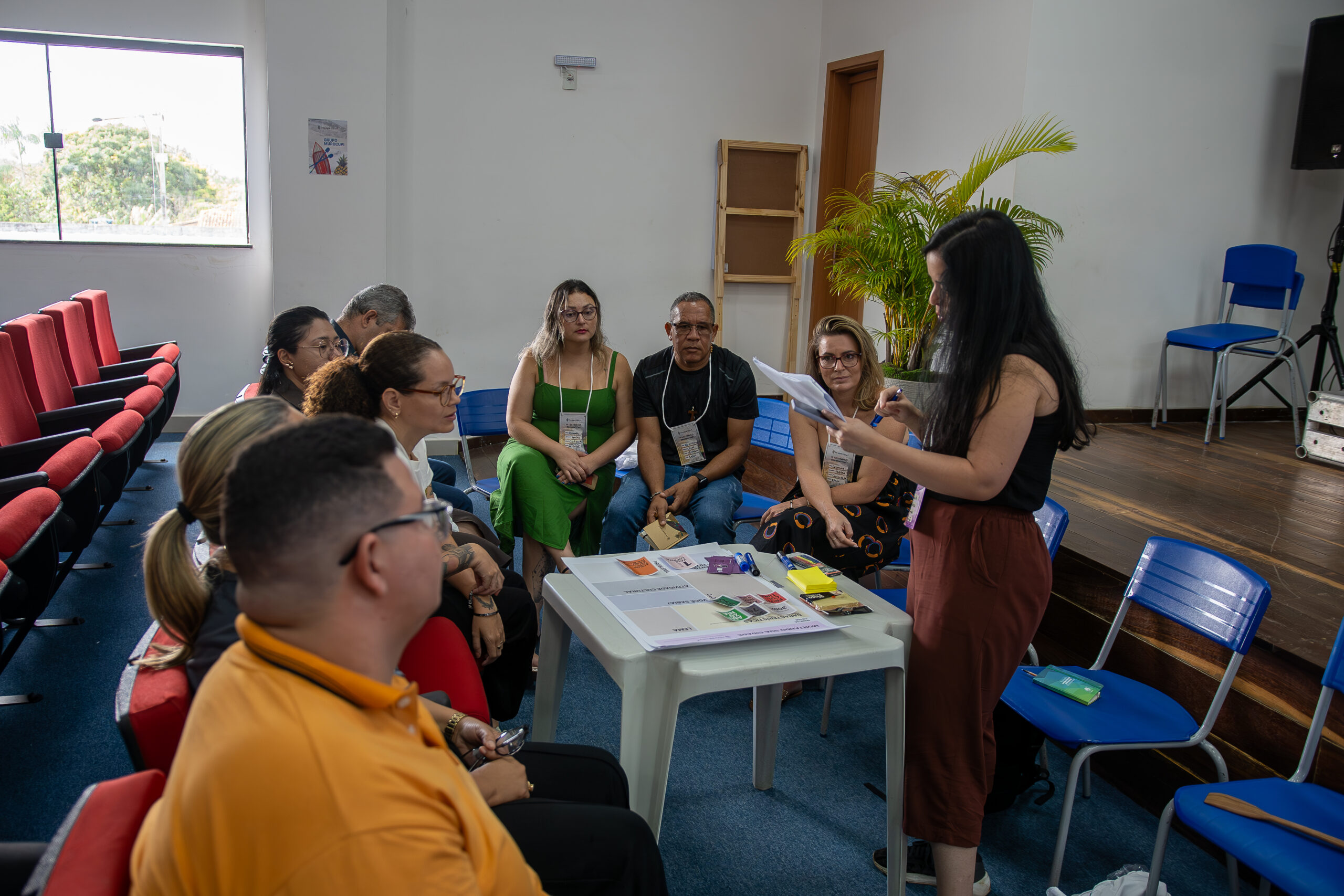
The Urban Laboratory for Public Food Policy (LUPPA) held the third seminar of the program’s 5th edition last Wednesday (29). Organized by the Food of Tomorrow Institute in partnership with ICLEI South America, the online meeting brought together municipal managers from the network to discuss the challenges of dietary monotony and actions cities can take to promote diversity in food systems. The event was supported by the Josué de Castro Chair (USP) and is part of LUPPA’s 2026 training program.
In addressing the concept and challenges of the triple food monotony, researcher Nadine Marques—a nutritionist with a master’s and doctorate in Public Health from the USP School of Public Health and executive coordinator of the Josué de Castro Chair—presented an overview of food systems and their complex, networked organization, as well as contextualizing how the Green Revolution of the 1960s and the prevalence of techniques that expanded agricultural production in the post-war context continue to impact practices to this day.
In this context, the triple food monotony emerges—comprising primarily monocultures in agriculture; the prevalence of intensive livestock breeds in animal husbandry; and ultra-processed foods in the food sector. In addition, the expert also addressed the impact of corporate control over production in the countryside, which influences the availability of seeds, pesticides, and production models that follow the logic of a few, but giant, private-sector companies.
The local counterpoint emerges from agroecology and its practices. Among the highlights are seed diversification through the incorporation of native seeds, which are preserved by traditional communities; bio-inputs instead of chemical fertilizers; integrated crop rotation; and agroforestry systems. Prioritizing local species adapted to regional biomes to revive food crops and de-intensify poultry and swine production, as well as moderately intensifying cattle production with regulated antibiotic use, were also practices cited by the researcher throughout the webinar.
Among the experiences shared by participating cities in the effort against food monotony, the municipalities of Campinas (SP), Niterói (RJ), and Santarém (PA) presented local initiatives to broaden the discussion:
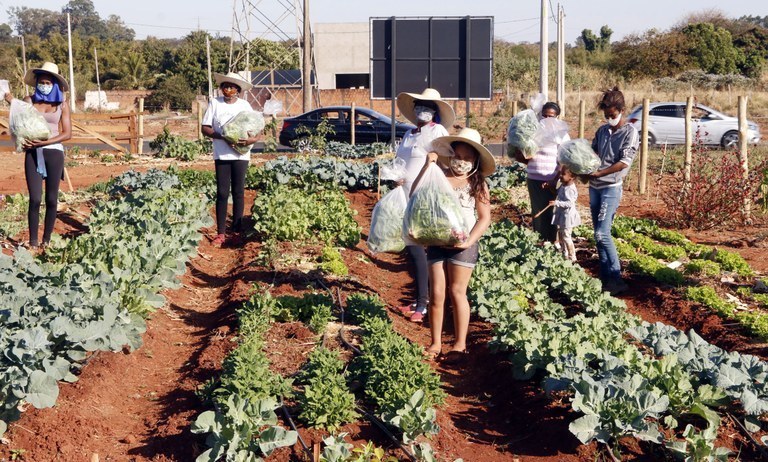
Mariana Maia, from Campinas (SP), presented the “Campinas Solidária e Sustentável” Program (Law 16.183/2021, Decree 2024), which promotes agroecological urban agriculture with 253 registered gardens, providing 300,000 seedlings, compost, tool kits, and water at subsidized rates.
Lson Viana, from Niterói (RJ), detailed Law 3,766/2023, which prohibits the sale of ultra-processed foods and beverages in public and private schools, stemming from research on childhood obesity and in collaboration with community kitchens and sustainable food workshops.
Vanderlina Maia, from Santarém (PA), shared the 2026 partnership with Emater-PA (via ICMBio in the Tapajós-Arapiuns Extractive Reserve), which offers rural technical assistance to 5,000 extractive/riverine families, diversifying from cassava to vegetables and fruits.
The seminar emphasized that dietary monotony is not an individual choice, but a model rooted in the current agri-food system, whose alternatives and improvements lie in agroecology and local coordination. By connecting theory and practice, the LUPPA seminar demonstrated how Brazilian cities can lead the transition toward more diverse, sustainable, and equitable food systems, with practical examples drawn from Brazilian cities and their social, cultural, and environmental contexts.
About the Program
LUPPA is a collaborative platform and an ongoing learning program designed to support and facilitate cities in promoting food policies with a systemic approach, in an intersectoral, coherent, and participatory manner.
Conceived by the Food of Tomorrow Institute in partnership with ICLEI Brazil, it has the full support of the Ibirapitanga Institute, the ICS – Climate and Society Institute, ITAÚSA, the Infinis Institute, and Porticus, as well as institutional support from FAO Brazil – the Food and Agriculture Organization of the United Nations
Share!
To learn more
Keep learning with other related articles